




SOW (Statement of Work) – Definition, Utility & Examples

What is SOW in business? Imagine a detailed roadmap that guides both client and vendor through the twists and turns of a project journey. This critical document outlines specific work, deliverables, timelines, and costs, serving as the North Star for all involved parties. The SOW definition in business extends beyond a mere checklist; it’s a comprehensive pact that aligns expectations and minimizes misunderstandings.
The Varied Applications of SOWs
From complex life sciences projects to short-term consultancy engagements, the SOW process proves indispensable in ensuring all stakeholders are on the same page. An SOW agreement meticulously defines objectives, responsibilities, and success criteria, laying a solid foundation for smooth project execution and fruitful business relationships.
As we explore the nuances of SOWs, you’ll uncover how this powerful instrument can elevate your project management prowess and drive superior business results.
What is a Statement of Work (SOW)?
An SOW is a formal document that defines the specific services, tasks, or products to be delivered in a project or contract. The statement of work meaning encompasses a detailed description of work requirements, deliverables, timelines, and performance expectations. It serves as a binding agreement between a client and a service provider, outlining the project’s scope, objectives, and expected outcomes.
In business contexts, an SOW acts as a crucial communication tool, ensuring all parties have a clear understanding of the work to be performed. It helps prevent misunderstandings, scope creep, and potential disputes by clearly defining project boundaries and expectations. An SOW is particularly valuable in complex projects or when engaging external vendors, as it provides a concrete reference point for all involved parties throughout the project lifecycle.
Key Components of an SOW
A Statement of Work (SOW) should include several essential elements to be effective. These components work together to create a comprehensive document that guides project execution and ensures alignment between parties. Here are the key elements:
- Project overview: A brief description of the project’s purpose and objectives.
- Scope of work: Detailed description of tasks, services, and deliverables.
- Timeline: Project start and end dates, milestones, and deadlines.
- Deliverables: Specific outputs or products to be provided.
- Performance standards: Quality metrics and acceptance criteria.
- Resources and requirements: Materials, equipment, or access needed.
- Pricing and payment terms: Cost structure and payment schedule.
- Roles and responsibilities: Clear delineation of duties for all parties involved.
- Assumptions and constraints: Any factors that may impact project execution.
- Change management process: Procedures for handling scope changes.
Including these components ensures that your SOW provides a clear roadmap for project success and minimizes potential misunderstandings or disputes.
Statement of Work vs. Scope of Work: Understanding the Difference
While often used interchangeably, a Statement of Work and a Scope of Work are distinct concepts with different purposes. A Statement of Work is a comprehensive document that outlines all aspects of a project, including timelines, deliverables, and payment terms. It serves as a legally binding agreement between parties.
In contrast, the Scope of Work is typically a subsection within the Statement that focuses specifically on the work to be performed. It details the tasks, activities, and deliverables required to complete the project successfully. The Scope of Work answers the question “What needs to be done?” while the SOW provides the broader context of “How, when, and at what cost?”
Understanding this distinction is crucial for effective project planning and execution. The SOW provides the overall framework, while the Scope of Work drills down into the specifics of the work to be completed.
The Utility of SOWs in Business
SOWs play a crucial role in various aspects of project management and contract execution. For instance, in pharmaceutical research, an SOW might detail the specific protocols for clinical trials, ensuring all parties understand the exact procedures, timelines, and expected outcomes.
In biotechnology, an SOW could outline the development process for a new gene therapy, specifying each phase of research and testing. For medical device manufacturers, SOWs are essential in defining the exact specifications and regulatory requirements for new products. These documents help life science companies maintain compliance with strict industry regulations while keeping projects on track and within budget.
SOWs also facilitate collaboration between different departments or external partners, ensuring everyone is aligned on project goals and methodologies.
Enhancing Project Clarity and Alignment
SOWs significantly improve understanding and agreement between parties involved in a project. They act as a comprehensive reference point, clearly defining project scope, objectives, deliverables, and timelines. This clarity helps prevent misinterpretations and ensures all stakeholders have the same expectations.
In a pharmaceutical project, an SOW might detail the exact formulation process for a new drug, including specific ingredients, quantities, and quality control measures. This level of detail leaves little room for ambiguity, aligning the research team, production staff, and quality assurance personnel.
SOWs also help in managing expectations of external partners or clients, providing a clear picture of what will be delivered and when. This alignment is crucial for maintaining productive relationships and ensuring smooth project execution.
Risk Mitigation and Dispute Prevention
SOWs are powerful tools for reducing conflicts and legal issues in business relationships. They establish a clear framework for project execution, leaving less room for misunderstandings that could lead to disputes. An SOW defines the scope of work, deliverables, timelines, and acceptance criteria, providing a solid reference point if disagreements arise.
If a dispute occurs over the quality of a delivered product, both parties can refer to the SOW’s defined specifications and quality standards. SOWs also help in managing scope creep, as any requests for additional work can be evaluated against the agreed-upon scope.
In case of delays or changes, the SOW provides a basis for negotiation and resolution. This proactive approach to risk management can save businesses significant time and resources that might otherwise be spent on resolving conflicts or legal battles.
The SOW Process: From Creation to Execution
The SOW process involves several key steps:
- Identifying project requirements
- Drafting the document
- Reviewing and revising
- Obtaining approvals
- Implementing the agreed-upon terms
Initially, stakeholders gather to define project objectives and scope. Next, a designated team or individual drafts the SOW, incorporating all necessary elements. The draft undergoes thorough review and revision, often involving multiple stakeholders.
Once finalized, the SOW is submitted for formal approval. Upon approval, the SOW guides project execution, serving as a reference point throughout the project lifecycle. Regular check-ins against the SOW help ensure the project stays on track and within scope.
Drafting an Effective SOW
Creating a clear and comprehensive SOW requires attention to detail and a structured approach. Start with a strong project overview that succinctly outlines the project’s purpose and goals. Clearly define the scope of work, detailing specific tasks, deliverables, and any exclusions. Establish a realistic timeline with key milestones and deadlines. Be precise when describing deliverables, including quantity, quality standards, and acceptance criteria.
Include a detailed breakdown of roles and responsibilities for all parties involved. Address potential risks and outline mitigation strategies. Specify the resources required, including personnel, equipment, and materials. Clearly state the pricing structure and payment terms.
Use clear, concise language throughout the document, avoiding jargon or ambiguous terms. Organize the SOW logically, using headings and subheadings for easy navigation. Include any relevant appendices or references to supporting documents.
Remember to tailor the SOW to your specific project and industry requirements. A well-crafted SOW sets the foundation for successful project execution and helps prevent misunderstandings or disputes down the line.
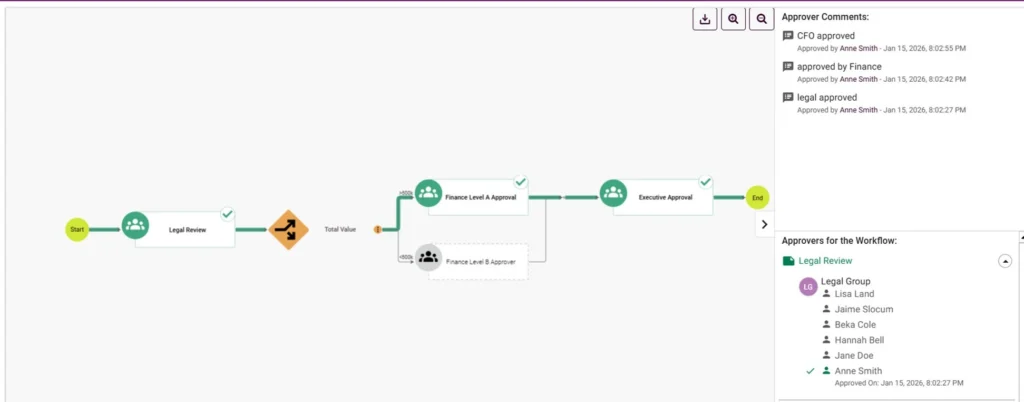
SOW Review and Approval Workflow
The SOW review and approval process typically involves multiple stages and stakeholders – depending on the organization’s structure and approval process. Once the initial draft is complete, it’s circulated among key team members for internal review. This may include project managers, subject matter experts, and legal counsel. Their feedback is incorporated into a revised draft.
Next, the SOW is often shared with the client or external stakeholders for their input. This step may involve negotiations to align on scope, timelines, or pricing. The document goes through several iterations until all parties are satisfied.
Once a final version is agreed upon, it moves to the formal approval stage. This usually involves sign-off from senior management, legal departments, and authorized representatives from all involved parties. Some organizations use digital signature tools to expedite this process.
After all approvals are obtained, the SOW becomes a binding document guiding project execution. It’s crucial to distribute the final, signed SOW to all relevant stakeholders and store it securely for future reference.
Types of SOWs and Their Applications
SOWs come in various formats, each tailored to specific project needs and contractual arrangements. The three main types are:
- Performance-Based SOWs
- Time and Materials SOWs
- Design/Detail SOWs
The choice of SOW type depends on factors such as project complexity, clarity of requirements, and the nature of the client-vendor relationship.
Some projects may benefit from a hybrid approach, combining elements from different SOW types. For instance, a research project in the pharmaceutical industry might use a Performance-Based SOW for the overall study objectives, while incorporating Time and Materials elements for specific laboratory work. This flexibility allows for both outcome-focused goals and adaptability in execution.
Performance-Based SOWs
Performance-based SOWs prioritize outcomes over processes, focusing on what needs to be achieved rather than how to achieve it. They define specific, measurable objectives and deliverables, allowing vendors flexibility in their approach. This type of SOW is ideal for projects with clear end goals but multiple potential execution methods.
It encourages innovation and efficiency, as vendors can leverage their expertise to determine the best way to meet the specified outcomes. Performance-based SOWs are particularly effective in industries where results matter more than the exact steps taken to achieve them, such as marketing campaigns or software development projects.
An SOW example in this category might include a marketing project with defined goals like “increase website traffic by 30%” or “generate 1000 qualified leads,” without specifying the exact marketing tactics to be used.
Time and Materials SOWs
Time and Materials SOWs are structured around the effort and resources required for a project, rather than specific deliverables. They outline hourly rates for different types of work and estimated costs for materials. This format is suitable for projects where the scope is unclear or likely to evolve, allowing for flexibility as requirements change.
Time and Materials SOWs are common in consulting, IT services, and research and development projects. They require careful monitoring to prevent cost overruns and ensure that the work performed aligns with the project’s overall objectives. Clear reporting mechanisms and regular check-ins are crucial for effective management of these SOWs.
For example, an IT support contract might use a Time and Materials SOW, specifying hourly rates for different levels of technical support and estimated costs for potential hardware replacements.
Design/Detail SOWs
Design/Detail SOWs provide comprehensive specifications for complex projects. They’re commonly used in manufacturing, construction, or product development where precise requirements are crucial. This type of SOW leaves little room for interpretation, detailing exact specifications, methodologies, and quality standards.
An SOW example in this category might include detailed blueprints, technical specifications, and quality standards for a new medical device. It would specify exact dimensions, materials to be used, manufacturing processes, and required certifications.
Design/Detail SOWs are particularly useful in highly regulated industries or for projects where precise replication is necessary. They provide a clear roadmap for execution but may limit flexibility in approach. When using this type of SOW, it’s important to ensure all specifications are accurate and complete to avoid costly changes or disputes later in the project.
In practice, many projects use elements from multiple SOW types to create a comprehensive and flexible project management tool. The key is to select the approach that best suits the specific needs of the project and provides the right balance of clarity, flexibility, and risk management.
Common Pitfalls in SOW Creation and How to Avoid Them
Creating an effective SOW can be challenging, and several common pitfalls can undermine its effectiveness. One frequent mistake is using vague or ambiguous language, which can lead to misinterpretations and disputes. To avoid this, use clear, specific terms and define any industry jargon or technical terms.
Another issue is scope creep, where the project expands beyond its original boundaries. Prevent this by clearly defining project boundaries and including a change management process in the SOW. This allows for controlled adjustments when necessary.
Overlooking key stakeholders during the SOW development process can result in incomplete or inaccurate specifications. Ensure all relevant parties are involved from the beginning, including technical experts, legal advisors, and end-users.
Unrealistic timelines or budgets can set a project up for failure. Base these elements on thorough research and historical data, and include contingencies for unforeseen circumstances.
Failing to align the SOW with the broader contract or master service agreement can create legal inconsistencies. Always review the SOW in the context of other relevant documents to ensure harmony.
Neglecting to include clear acceptance criteria can lead to disputes over project completion. Define specific, measurable criteria for each deliverable to avoid this issue.
Leveraging Technology for SOW Management
Contract Lifecycle Management (CLM) solutions offer powerful tools for creating, managing, and executing SOWs more efficiently. These platforms provide centralized repositories for SOW templates and clauses, ensuring consistency across projects and reducing drafting time.
CLM systems often include workflow automation features, streamlining the review and approval process. This can significantly reduce turnaround times and ensure all necessary stakeholders are involved at the appropriate stages.
Advanced CLM solutions incorporate artificial intelligence to analyze SOWs, flagging potential issues or inconsistencies. This can help identify risks early in the process and ensure compliance with organizational standards and legal requirements.
Version control features in CLM platforms help track changes throughout the SOW lifecycle, providing a clear audit trail and reducing the risk of working from outdated documents.
Many CLM systems offer integration with other business tools, such as project management software or financial systems. This allows for seamless data flow between different aspects of project execution and contract management.
Reporting and analytics capabilities in CLM solutions provide valuable insights into SOW performance, helping organizations identify trends, bottlenecks, and opportunities for improvement in their SOW processes.
How Malbek Helps With SOWs — Core Capabilities
At a general level, Malbek offers capabilities that map directly to SOW lifecycle needs:
- It provides a centralised platform for contract lifecycle management (CLM), enabling creation, negotiation, version control and tracking of SOW documents.
- It embeds AI-powered contract intelligence (via Malbek AI) that can extract key terms, risks, milestones and change-control triggers from SOWs, thereby improving visibility and reducing manual effort.
- It supports workflows, integrations, template management and governance (for example clause libraries, amendment handling) — thereby supporting standardisation of SOWs and enabling efficient updates and oversight.
- It enables cross-departmental collaboration (Legal, Procurement, Sales, Finance) and breaking down data silos so that SOWs become not only legal documents but operational artefacts.
In short: Malbek transforms SOWs from static contractual documents into living artefacts that can be monitored, governed and analysed across their lifecycle.
Industry-Specific SOW Support for Your Company
| Industry | Common SOW Challenges | How Malbek Helps |
| Manufacturing | Frequent amendments Compliance & material updates | One-click mass amendments Tracks cost/material/compliance Integrates SOW terms with procurement workflows |
| Procurement / Vendor Management | Inconsistent vendor SOWs Limited visibility into obligations | Standardized templates AI alerts for expirations/deviations Full audit trail |
| Technology / IT Services | Complex deliverables & SLAs Evolving technical scope | Centralized SOW creation AI extraction of milestones Cross-functional visibility |
| Healthcare & Life Sciences | Regulatory controls Strict documentation requirements | Strong version control AI insights on regulatory obligations; Automated alerts & linked documentation |
How Exactly can Malbek Help in Your Industry?
Manufacturing
In the manufacturing contract management, SOWs often involve supplier agreements, distribution agreements, frequent amendments (e.g., material cost change, supply-chain disruption).
Malbek’s solution for the manufacturing sector:
- Allows for mass amendments of SOW-type documents (supplier/sub-vendor SOWs) with one-click capability.
- Supports tracking cost changes, material standards and regulatory compliance embedded in SOWs.
- Enables integration of SOW terms (deliverables, materials, quality standards) with procurement and vendor-management workflows within the CLM.
Procurement / Vendor Management
In procurement, SOWs often define vendor deliverables, service levels, pricing, change controls and obligations. Malbek’s procurement solution emphasises strategic vendor relationship success.
Malbek’s enables you to have:
- Template and clause libraries calibrated for SOWs in vendor/outsourced-services contexts, ensuring consistency.
- AI-driven alerts when SOW obligations are nearing expiry or when vendor deliverables deviate from agreed SOW terms (mitigating vendor risk).
- Strong governance and audit trail of changes to SOWs, helping compliance and transparency.
Technology / IT Services
In IT services, SOWs often cover software development, integration, implementation, SLA obligations, agile vs waterfall mode deliverables. We have written a detailed article on the specific challenges and remedies of SaaS contract management and how CLMs can help here.
Healthcare & Life Sciences
Malbek for Life Sciences offers:
- Strong version-control and audit logging of SOWs, aligned with regulatory compliance needs.
- AI-powered contract intelligence to surface obligations tied to regulatory milestones, change controls, deliverables acceptance — critical in these environments.
- Workflow automation to alert stakeholders to upcoming deliverables, document linkage (specs, regulatory approvals) and ensure alignment across functions.
For more information on healthcare pain points & solutions read our dedicated blog post here.
Conclusion
Statements of Work are essential tools for defining project parameters, aligning expectations, and mitigating risks in business relationships. When crafted effectively, SOWs provide a clear roadmap for project execution, helping to prevent misunderstandings and disputes.
By understanding the different types of SOWs, avoiding common pitfalls in their creation, and leveraging technology for their management, organizations can significantly enhance their project outcomes and contract performance.
As businesses continue to engage in complex projects and collaborations, mastering the art of SOW development and management becomes increasingly crucial. Implementing best practices in SOW creation and utilizing advanced CLM solutions can lead to more successful projects, stronger business relationships, and improved overall organizational performance.
FAQs – SOW (Statement of Work)
What does SOW stand for?
The acronym SOW stands for “Statement of Work.” It represents a formalized agreement that captures the operational, technical, and managerial expectations governing a project or engagement.
In some instances and industries it refers to “Scope of Work” – but we primarily focus on the aforementioned “Statement of Work” in this article.
What is a Statement of Work (SOW)?
A Statement of Work (SOW) is a legally binding document that defines the scope of work, performance standards, and delivery expectations between contracting parties. Its purpose is to ensure transparency and accountability.
Key elements:
- Project scope and objectives: Clarifies deliverables and outcomes.
- Timeline and milestones: Establishes measurable phases.
- Roles and responsibilities: Defines obligations of all parties.
- Acceptance criteria: Outlines how completion is evaluated.
How does a SOW define the scope of work?
The scope of work section within a SOW:
- Enumerates project tasks and deliverables.
- Establishes constraints such as budget and timeline.
- Clarifies what is in scope and out of scope.
This delineation ensures clarity and minimizes disputes.
What does SOW mean in business?
In business contexts, SOW stands for Statement of Work and constitutes the cornerstone of project governance. It provides a structured representation of deliverables, obligations, and performance benchmarks that define how contractual expectations are to be fulfilled within a specified timeframe.
What is the purpose of a SOW in project management?
In project management, a Statement of Work functions as an authoritative document defining the project’s operational perimeter, deliverable criteria, and evaluation mechanisms. It ensures all stakeholders align on scope, roles, and performance indicators before project initiation.
What is the difference between a SOW and a contract?
While both are legal instruments, their functions differ:
- Contract: Establishes the general terms of the relationship, including payment, liability, and confidentiality.
- SOW: Specifies the detailed scope of work, deliverables, and project-specific criteria.
Together, they form the complete legal framework for execution and accountability.
Why is a SOW important for procurement management?
A well-constructed Statement of Work is critical in procurement because it transforms abstract service requirements into measurable criteria. It provides a legally verifiable framework for vendor selection, performance evaluation, and compliance assurance.
What are the main components of a Statement of Work?
A comprehensive SOW typically includes:
- Payment terms and governance model.
- Introduction and background.
- Scope of work and objectives.
- Deliverables and milestones.
- Schedule and timeline.
- Acceptance criteria and performance standards.
What is a SOW template and why is it useful?
A SOW template standardizes documentation by:
- Ensuring consistency across projects.
- Reducing drafting errors and omissions.
- Facilitating compliance with internal and legal standards.
Templates enhance efficiency while maintaining legal precision.
How does SOW management improve project outcomes?
SOW management enhances project governance by integrating monitoring, evaluation, and compliance into a single framework. Through systematic oversight of deliverables and performance indicators, it ensures both operational efficiency and legal accountability.
FAQs – Industry-Specific SOWs
What is a SOW in IT services?
In IT services, a SOW defines:
- Project deliverables such as software modules or integrations.
- Technical requirements like APIs, environments, and data standards.
- Service levels (SLAs) and acceptance benchmarks.
It ensures the client and provider maintain shared technical expectations.
What does SOW mean in construction?
A construction SOW outlines the precise methods, materials, and performance expectations that govern a project. It translates design intent into measurable obligations, ensuring safety, quality, and regulatory compliance throughout execution.
How is a SOW used in consulting services?
In consulting agreements, a SOW:
- Defines project objectives and expected outcomes.
- Details research methodologies or advisory processes.
- Outlines milestones and deliverables.
What is a SOW in cybersecurity projects?
In cybersecurity, a SOW includes:
- Defines testing or remediation deliverables (e.g., penetration tests, audits).
- Specifies compliance frameworks (ISO 27001, NIST, GDPR).
- Details incident response procedures and acceptance criteria.
How does a SOW apply to software development?
In software development, a SOW includes:
- Functional specifications and acceptance criteria.
- Milestone-based delivery schedules.
- Testing and validation requirements.
It also forms the operational baseline for agile or waterfall methodologies.