




Procurement Specialist: Skills & Role in the Procurement Department

Organizations spend a significant portion of their revenue on supplier agreements, materials, and services, averaging 43% of total costs*. Manufacturing companies typically allocate between 50% and 80% of their revenue to procurement, while service-based businesses generally spend between 25% and 35%. The procurement specialist stands at the center of this process, ensuring every dollar delivers maximum value while meeting quality and compliance requirements.
Procurement teams typically target cost reductions of 5% to 10% through strategic negotiations and process improvements, with these savings flowing directly to improved profitability and competitive advantage.** As businesses face increasing supply chain complexity and regulatory scrutiny, the procurement function has evolved from transactional back office work into a strategic business partnership that directly impacts profitability. The question “what is a procurement specialist” now encompasses both operational expertise and strategic business acumen.
What Is a Procurement Specialist? Defining the Role in Organizations
A procurement specialist manages the acquisition of goods and services, serving as the liaison between internal stakeholders and external suppliers. Typically reporting to a procurement manager or director, these professionals hold decision-making authority over purchasing selections, evaluate supplier capabilities, and execute binding contracts.
The distinction between a procurement specialist and a purchasing specialist is significant. Purchasing specialists execute transactions: placing orders, tracking deliveries, and processing invoices. The procurement function encompasses these tactical elements but extends into strategic territory. Procurement specialists analyze market conditions, develop sourcing strategies, evaluate the total cost of ownership, and align decisions with business objectives. They consider supplier financial stability, quality systems, ethical practices, and partnership potential rather than focusing solely on unit price.
What Does a Procurement Specialist Do? Daily Operations and Tactical Responsibilities
Daily procurement tasks center on executing the requisition to payment cycle with accuracy and efficiency. These operational activities demand meticulous attention to detail.
The U.S. Department of Labor’s occupational database identifies procurement specialist as a core job title within purchasing operations, describing professionals who purchase goods and services for organizational use while maintaining supplier relationships and ensuring compliance with purchasing policies.
Order Management and Vendor Coordination
Procurement specialists review purchase requisitions submitted by departments, validating requests against budgets and verifying proper authorization. This review catches errors before they become problems: incorrect quantities, incomplete specifications, or duplicate orders. They convert approved requisitions into purchase orders, select appropriate suppliers from qualified vendor lists, confirm current pricing and terms, and ensure delivery dates align with project timelines. The specialist communicates expected delivery dates to requesting departments and obtains supplier acknowledgment confirming acceptance of the order.
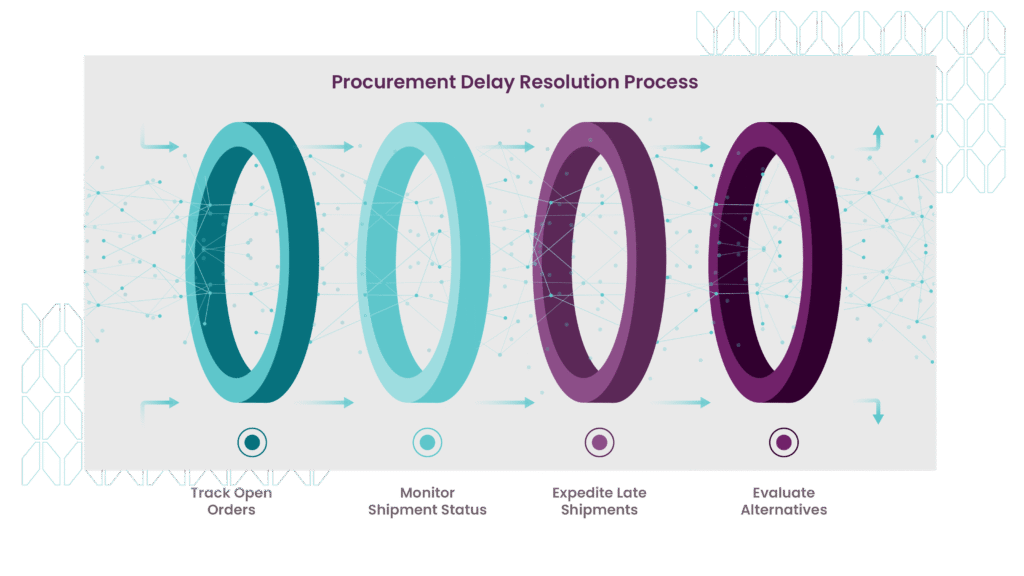
Vendor coordination continues throughout the order lifecycle. Specialists track open orders, monitor shipment status, expedite late shipments, and update delivery schedules in the procurement system. When suppliers face delays or material shortages, the specialist evaluates alternatives:
- Accepting delayed delivery with adjusted project schedules
- Sourcing from backup suppliers at potentially higher cost
- Working with requesters to identify substitute products that meet specifications.
Receiving processes require verifying that delivered goods match purchase order specifications in quantity, quality, and condition. Discrepancies trigger investigation and resolution through supplier credits, return authorizations, or replacement shipments. This verification protects the organization from paying for products that fail to meet agreed standards.
Documentation, Reporting, and Performance Tracking
Specialists manage purchase orders, quotes, contracts, and invoices within procurement systems. Regular reports compile spending by category, department, and supplier, revealing patterns and budget variances. Performance tracking monitors on-time delivery rates, quality acceptance, and order accuracy. This data informs supplier reviews and identifies process bottlenecks requiring attention.
Strategic Procurement Function: Beyond Transactional Procurement Tasks
The strategic procurement specialist creates a competitive advantage through activities that drive long-term value beyond transaction processing.
Supplier Relationship Management and Strategic Partnerships
A senior procurement specialist cultivates supplier relationships through regular communication, performance feedback, and problem-solving. Quarterly business reviews with key suppliers address performance metrics, concerns, and upcoming requirements.
Strategic partnerships target suppliers whose capabilities make them particularly valuable. These may involve volume commitments for preferential pricing, early access to new products, or joint development. Supplier performance management systems provide structured frameworks for measuring delivery, quality, and compliance. Poor performers receive improvement plans, while top performers earn preferred status.
Risk management requires monitoring supplier financial health, operational capacity, and factors that could disrupt supply. Specialists maintain backup suppliers for critical items and develop contingency plans.
Contract Negotiation and Terms Optimization
Contract negotiation extends beyond price to payment terms, delivery schedules, quality specifications, warranties, liability limitations, and renewal options. Preparation requires research into market pricing, supplier costs, and negotiating leverage.
Contract drafting demands attention to language defining obligations, performance standards, and remedies for non-performance. Multi-year agreements require particular attention to pricing mechanisms, volume commitments, and adjustment provisions.
Essential Procurement Specialist Skills: The Complete Competency Profile
Success in procurement demands analytical rigor, interpersonal effectiveness, and business judgment.
Hard Skills: Analysis, Financial Acumen, and Technical Proficiency
Analytical capability enables specialists to evaluate complex data, compare supplier quotes across multiple variables, calculate the total cost of ownership that factors in maintenance costs and failure rates, and forecast demand based on historical patterns. These skills inform decisions about supplier consolidation, savings opportunities, and optimal contract structures.
Financial skills help them understand how purchasing decisions affect organizational performance. Budget management requires tracking expenditures, explaining variances, and adjusting spending plans when needed. Cost analysis breaks down supplier pricing into components such as materials, labor, overhead, and margin to identify where negotiation should focus.
Understanding financial statements allows assessment of supplier financial health. Balance sheet strength, cash flow adequacy, and profitability trends indicate whether suppliers can honor long-term commitments. Suppliers facing financial distress present supply continuity risks that procurement must recognize early.
Technical proficiency with procurement software has become mandatory. Enterprise resource planning platforms, sourcing tools, contract management systems, and analytics applications require specialists to input data accurately, configure workflows, and extract reports effectively.
Soft Skills: Communication, Negotiation, and Cross-Functional Collaboration
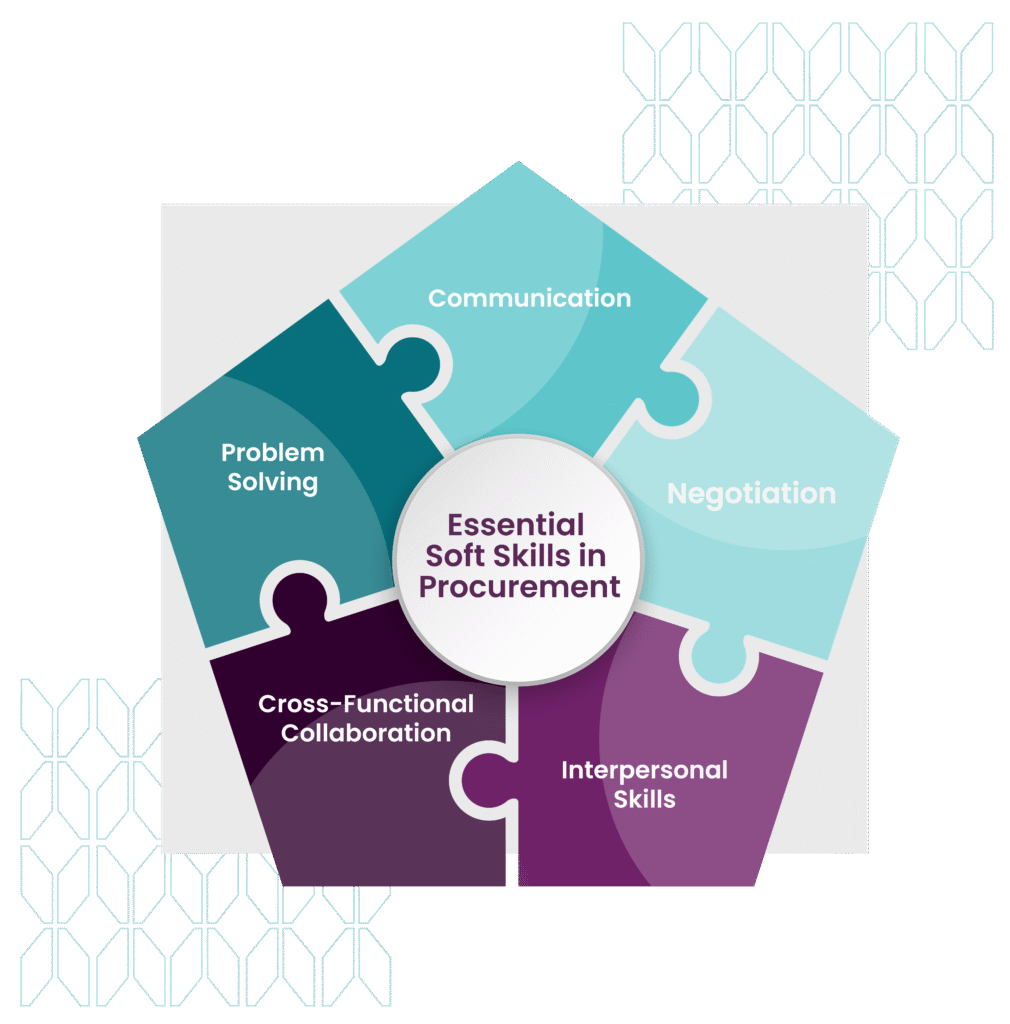
Clear communication ensures alignment with suppliers and stakeholders. Written skills produce clear purchase orders and specifications; verbal skills enable productive discussions and presentations. Negotiation extends beyond formal contracts to daily interactions, balancing competing interests.
Interpersonal skills build relationships across departments and with suppliers. Specialists who listen actively and follow through earn credibility. Cross-functional collaboration has become critical as procurement integrates with engineering, quality assurance, and operations. Problem-solving distinguishes specialists who work through supply disruptions, quality failures, and delivery delays from those who escalate every issue.
Procurement Department Roles and Responsibilities: Understanding the Career Ladder
Procurement organizations structure themselves hierarchically with roles defined by scope, decision authority, and strategic involvement.
Entry-level positions, such as procurement coordinator, handle defined transactional tasks under supervision. The procurement specialist role represents independent operation within assigned categories. Specialists manage supplier relationships, negotiate contracts up to defined thresholds, and make sourcing decisions balancing cost, quality, and delivery.
Senior procurement specialist positions carry expanded scope and complexity. These professionals handle the largest or most strategic categories, manage key relationships, and lead sourcing projects. Procurement managers oversee multiple specialists, allocate responsibilities, and set performance goals. Director and chief procurement officer roles operate at the executive level, establishing strategy and managing portfolios worth millions of dollars.
Specialized Procurement Roles: IT, Strategic, Energy, and Supply Chain Specialists
As organizations grow, specialized roles emerge to address categories requiring dedicated expertise. An IT procurement specialist focuses exclusively on technology purchases:
- Hardware
- Software
- Cloud services
- Telecommunications
- IT professional services
This specialization demands an understanding of technology trends, software licensing models, subscription versus perpetual license economics, service level agreements, and information security requirements. IT procurement specialists must evaluate vendor lock-in risks, assess scalability requirements, and understand technology roadmaps.
The strategic procurement specialist concentrates on high-value categories where sourcing decisions significantly impact business performance. These specialists lead competitive bidding processes, develop category strategies, and negotiate enterprise agreements. Their work emphasizes market intelligence, total cost analysis, and strategic supplier partnerships that create competitive advantages.
An energy procurement specialist manages electricity, natural gas, and other energy purchases for organizations where energy represents a major cost component. This role requires knowledge of commodity markets, futures contracts, hedging strategies, regulatory requirements, and risk management approaches.
Organizations with complex logistics operations employ a carrier procurement specialist who negotiates transportation rates and manages relationships with freight carriers, logistics providers, and warehouse operators. This specialization requires an understanding of transportation modes, rate structures, and supply chain network design.
The supply chain procurement specialist takes an end-to-end view, aligning procurement decisions with inventory optimization, production planning, and distribution requirements. This role emphasizes demand forecasting, supplier capacity planning, and supply chain risk mitigation.
How to Become a Procurement Specialist: Education, Certification, and Career Entry
A bachelor’s degree in business administration, supply chain management, finance, or economics provides foundational knowledge. Coursework in statistics, accounting, business law, and negotiation directly supports procurement work. Specialized supply chain programs offer procurement focused classes covering sourcing strategy, contract management, and analytics.
Internships allow students to gain practical experience and often lead to full-time roles. Entry typically begins with coordinator or analyst positions providing exposure to procurement processes. Professional certifications demonstrate commitment and validate knowledge. The Certified Purchasing Professional (CPP) and Certified Professional Public Buyer (CPPB) require passing examinations covering procurement fundamentals. The Certified Supply Chain Professional (CSCP) takes a broader view of supply chain strategy.
Professional associations provide networking, education, and industry connections that accelerate career development. Career progression rewards both depth in specific categories and breadth across different commodities or business units.
Procurement Specialist Salary: Compensation Across Experience Levels
The procurement specialist salary varies based on experience, education, industry, location, and responsibility scope. According to the Bureau of Labor Statistics, purchasing agents and buyers earned a median annual wage of $75,650 in 2024, with the top 10% earning over $127,000.
- Entry-level specialists and coordinators typically start between $45,000 and $60,000 annually, while experienced professionals reach the national median or higher.
- Mid-career specialists with three to seven years of experience typically earn $60,000 to $85,000. Senior procurement specialist positions command $85,000 to $115,000 annually.
- Specialized roles such as IT procurement specialist or strategic procurement specialist may earn premium compensation due to technical knowledge or strategic importance, typically ranging from $75,000 to $120,000. Procurement managers earn $100,000 to $140,000, while directors can earn $140,000 to $200,000 or more in large organizations.
Geographic location significantly impacts compensation, with major metropolitan areas offering higher salaries. Total packages may include performance bonuses tied to cost savings, stock options, and professional development funding.
The Evolving Procurement Operations: Digital Transformation and New Challenges
Procurement has entered rapid change driven by technology adoption, regulatory expansion, and supply chain complexity.
From Manual Processes to Intelligent Automation
Traditional procurement relied on email exchanges, spreadsheet analysis, paper approvals, and filing cabinets. This consumed substantial time, introduced errors, and limited what procurement could accomplish. Digital transformation replaces manual activities with automated workflows, centralized repositories, and intelligent tools. Purchase requisitions now route automatically to approvers. Contract repositories make agreements searchable. Spend analytics platforms generate insights without manual compilation.
This automation allows specialists to focus on supplier development, market research, and strategic sourcing. However, it also raises performance expectations and requires specialists to develop new competencies in configuring workflows and building analytics reports. Artificial intelligence applications using multiple large language models can analyze contracts, predict supplier risk, and optimize inventory.
Compliance Complexity and Risk Management in Global Procurement
Regulatory requirements have expanded significantly. Data privacy regulations restrict supplier information handling. Trade compliance rules govern permissible business partners. Environmental regulations affect product specifications. Labor standards prohibit sourcing from suppliers using forced labor. Procurement specialists must ensure compliance through supplier due diligence, documentation, and purchase restrictions.
Contract accuracy has grown critical as agreements grow complex and disputes costly. Missing unfavorable terms during review can commit the organization to price increases or excessive liability. Global supply chains introduce currency fluctuations, political instability, and quality control challenges. Risk management has become core to procurement: identifying disruption sources, assessing likelihood and impact, and developing mitigation strategies.
How Contract Lifecycle Management Technology Supports Procurement Excellence
The contract accuracy challenges and compliance risks discussed earlier create a dilemma for procurement teams: manual review catches some issues but consumes days or weeks per agreement, while rushing through contracts leaves organizations exposed to unfavorable terms and regulatory violations. Neither approach scales when managing hundreds of supplier relationships across multiple categories.
Contract lifecycle management platforms address this challenge, but not all CLM solutions deliver equal results. Single-model AI systems often generate plausible-sounding but inaccurate analyses, forcing procurement specialists to verify every suggestion manually. Organizations need contract review capabilities that combine automation speed with accuracy they can trust.
Malbek’s Ensemble LLM Approach for Procurement Contract Analysis
Malbek addresses contract review accuracy through its Ensemble LLM architecture, which leverages multiple large language models from Azure OpenAI, AWS Anthropic, and AWS Mistral working together rather than relying on a single AI system. When a procurement specialist receives a supplier agreement, the platform analyzes it through multiple models, each bringing different strengths to the review process.
The system’s chain of verification mechanisms validates findings at each step through confidence scoring. When reviewing a supplier contract’s payment terms, for example, one model extracts the relevant clauses while subsequent models verify the interpretation, generating confidence scores that determine whether the analysis warrants the specialist’s attention. This multi-layer validation catches the hallucinations and errors that plague single-model systems.
Malbek’s Retrieval Augmented Generation capability ensures contract analysis references the organization’s actual policies and standards rather than generic legal principles. When evaluating liability provisions, the platform retrieves relevant context from stored playbooks and past agreements, comparing proposed terms against the organization’s specific risk tolerance and negotiation history.
Key Capabilities That Transform Procurement Contract Management
Smart tagging functionality automatically categorizes and maps clauses across the entire supplier agreement portfolio. Procurement can instantly identify all contracts containing force majeure provisions, price escalation clauses, or liability caps. When regulatory requirements change or the organization updates its standard terms, specialists immediately determine which supplier agreements require renegotiation.
Automated playbook evaluation runs incoming supplier contracts against the organization’s approved standards without manual intervention. These digital playbooks encode procurement policies, checking whether proposed payment terms align with company cash flow requirements, liability provisions protect the organization adequately, and delivery schedules match production needs.
Contract summarization capabilities let procurement specialists understand lengthy supplier agreements in minutes. Rather than reading through 50 pages of legal language, specialists review AI-generated summaries capturing pricing structures, delivery obligations, quality standards, and termination rights. The platform’s authoring assistant helps specialists draft compliant contract language quickly, maintaining consistency across agreements while accelerating the drafting process.
These capabilities transform procurement contract management from a bottleneck into a competitive advantage. Procurement specialists apply their negotiation expertise and supplier relationship skills while Malbek’s Ensemble LLM handles time-consuming review and analysis work. Organizations implementing the platform report measurable reductions in contract cycle time, improved compliance with procurement policies, and greater confidence in supplier agreement terms.
Conclusion
The procurement specialist occupies a critical position in organizational success, managing expenditures that represent the largest component of operating costs. This role demands both operational precision and strategic thinking. Success requires financial analysis, negotiation, relationship management, and increasingly, technology proficiency.
The profession continues to evolve as digital tools automate routine activities and enable sophisticated analysis. Procurement specialists who develop category expertise and business acumen will find growing opportunities. Those who embrace technology as an enabler will position themselves for advancement. Organizations that invest in procurement capability through talent development and technology adoption realize substantial returns through reduced costs, improved quality, enhanced compliance, and stronger supplier relationships.
Ready to see how Malbek can elevate your procurement team’s contract management capabilities? Schedule a personalized demo to discover how Ensemble LLM technology can accelerate supplier agreement review, ensure compliance with procurement policies, and give your specialists the tools they need to manage contracts at scale. Contact our customer success team to learn more about bringing AI-powered intelligence to your procurement contract lifecycle.
**source: https://precoro.com/blog/procurement-cost-reduction/