




Your Revenue Lives Inside Your Contracts. ASC 606 Just Proved It. Again.

Here’s a question I like to ask CFOs: where does your revenue actually come from?
Most will point to their ERP, their billing system, maybe their CPQ. And they’re all wrong. Every dollar of revenue your company will ever recognize originates in one place: a contract. The performance obligations, the pricing terms, the ramps, the renewal mechanics, the termination rights, the SLAs with credits attached. All of it lives in contract language long before it ever becomes a journal entry.
ASC 606 made this truth impossible to ignore when it arrived. And right now, in the middle of the AI economy’s growth-at-all-costs sprint, the standard is about to have its loudest second act. Because the hottest debate in software isn’t about models or agents. It’s about whether a token is revenue.
Stay with me. This gets good, and it ends squarely in your contract portfolio.
A Quick Refresher, Because This Matters
ASC 606 — formally Revenue from Contracts with Customers (Topic 606) — and its international twin, IFRS 15, replaced the old ASC 605 regime of industry-specific revenue rules with a single principle: recognize revenue when you transfer goods or services to a customer, in the amount you expect to be entitled to. It runs on a five-step model:
- Identify the contract with a customer
- Identify the performance obligations in the contract
- Determine the transaction price
- Allocate the transaction price to the performance obligations
- Recognize revenue as each obligation is satisfied
Read those five steps again. Steps one and two are literally contract analysis. Steps three and four depend entirely on terms written into contract language. Step five requires knowing what the contract promised and when it was delivered.

ASC 606 is not an accounting exercise that happens to touch contracts. It is a contract intelligence exercise that ends in accounting.
The Token Debate: Is Pass-Through Compute Actually Revenue?
A debate lit up my feed this week that perfectly captures why this standard is back at center stage. It started with a sharp observation about vertical AI software companies: as API and model costs rise, many are shifting to consumption pricing. At least one prominent legal AI player has made the move publicly, with rumors that others will follow.
And that shift surfaces an uncomfortable question that almost nobody is asking out loud: if you’re passing token costs through to your customers, does that spend still count as your revenue? Or is it closer to GMV, the way e-commerce marketplaces don’t book the value of goods sold on their platforms, and payment processors don’t book transaction volume?
The thread that followed was one of the best public accounting debates I’ve seen in years. A few of the arguments, synthesized and anonymized:
The double counting problem. If pass-through token costs are booked as revenue, the same token gets counted twice: once by the model provider, once by the application company built on top of it. One token, two revenue lines, two valuations propped up by the same dollar. One commenter called it vendor financing with a better logo. Another pointed to ecosystem-level analysis suggesting that once you deduplicate the AI value chain, the real revenue number shrinks meaningfully.
The restatement math. If pass-through costs do NOT count as revenue, a lot of AI-native companies would face brutal readjustment. One estimate in the thread: a company trading at 50x revenue could effectively be trading at 250x after netting, assuming a 20 percent take rate. Several commenters noted that some vendors are actually selling tokens at a discount to win share, meaning gross revenue up, real economics deeply underwater.
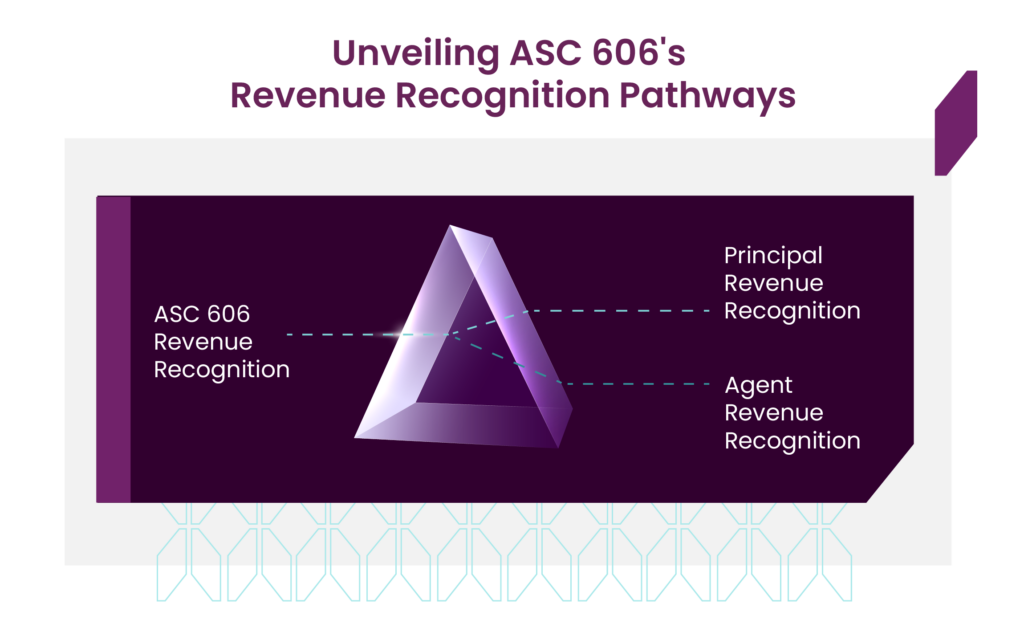
The principal versus agent resolution. Here’s where the accountants entered the chat, and they were right. ASC 606 and IFRS 15 already named this fight: the principal versus agent test. If you set the price, control the service, and carry the risk, you book gross. If you’re passing a meter reading through, you book net. The marketplace sector already lived this movie when ASC 606 took effect, and a wave of companies quietly shifted from gross to net reporting. Nobody enjoyed the restated numbers.
The bleed test. My favorite contribution was a simple heuristic: if the model provider raised prices 20 percent tomorrow, who bleeds? If the customer eats it, you’re an agent, and your “ARR” is closer to GMV. If you eat it, you’re a principal, and you have a margin problem wearing an ARR costume. Either way, the answer is written somewhere very specific, and I’ll come back to that.
The counterweight. To be fair, strong voices pushed back. Token costs, they argued, are just COGS, like cloud infrastructure, and netting them out gives you gross margin, not “negative revenue.” Others made the value argument: not all tokens are equal, and in high-stakes domains like legal, the value per token is dramatically higher than the compute underneath it. Consumption pricing done right is priced on value delivered, not on cost passed through. One founder operating on consumption pricing noted that cost recovery isn’t even the main driver; alignment of customer and vendor incentives is.
The diligence reality. And a deal advisor landed the practical truth: ARR is not an audited or standard-defined term. Plenty of private companies will keep booking gross. It will fall to investors, acquirers, and boards to see through the methodology. They always do.
Why This Debate Is Actually a Contract Debate
Now here’s the part that the accounting commentary largely skipped, and it’s the part I care about most.
Principal versus agent isn’t decided in a spreadsheet. It’s decided in contract language. Who sets the price? Who carries performance risk? Who bears the cost increase when the upstream provider reprices? Is there a pass-through clause, a cost-adjustment mechanism, an index? Who is responsible to the customer for the service actually working? Every one of those determinations, the exact factors auditors and diligence teams will use to decide whether your revenue is gross or net, real or inflated, lives in the four corners of your customer agreements and your vendor agreements.
Which means the companies sweating the token question can’t answer it with a policy memo. They have to answer it with their contract portfolio. And most of them can’t read their own portfolio at that level. That should terrify their CFOs and their investors in equal measure.
This is the pattern I keep coming back to: every era’s hardest revenue question turns out to be a contract question in disguise.
Angle One: Revenue Quality Is Valuation. Contracts Are Revenue Quality.
Zoom out and the token debate is just the newest instance of an old rule. Your valuation multiple is built on revenue quality, and revenue quality is adjudicated in your contracts.
Whether you’re a public company facing the market every quarter, a PE-backed business heading toward exit, or a growth-stage company raising your next round, sophisticated money asks the hard questions:
- How much revenue is recurring versus one-time?
- How much is committed versus variable?
- Are you principal or agent on every revenue stream, and can you prove it?
- What’s sitting in remaining performance obligations (RPO)?
- What termination rights, most-favored-nation clauses, refund provisions, or change-of-control triggers could unwind it?
Every answer lives in agreements. During M&A due diligence, buyers send armies of analysts to read contracts precisely because the contracts, not the financial statements, tell them whether the revenue is real, durable, and transferable. As the thread made clear, when reported metrics and contractual reality diverge, investors eventually reprice the difference. The only question is whether you find the gap first or they do.
Flip it around: if your organization can answer those questions instantly, with evidence, from a live system that understands every obligation and every pricing mechanism across every agreement, you’re not just audit-ready. You’re diligence-ready. Clean contract data is clean revenue data, and clean revenue data is enterprise value.
Remaining Performance Obligations: The Number That Lives in Your Contracts
If you want the single cleanest example of revenue that lives inside contracts, look at remaining performance obligations. RPO is the committed revenue you’ve booked in signed agreements but haven’t yet recognized — the contracted future you’re obligated to deliver and entitled to collect. Public companies disclose it because investors treat it as a truth serum: bookings can be massaged and pipeline is a story, but RPO is what the contracts actually say you’re owed.
Here’s the problem. RPO is not a number that lives in your ERP. It’s the sum of every committed minimum, every ramp, every non-cancellable term, and every renewal already locked across your entire portfolio — net of the cancellation rights and termination-for-convenience clauses that can quietly disqualify a chunk of it. Assemble that by hand and you get a quarterly fire drill and a footnote nobody fully trusts.
Assemble it from a live view of your agreements and RPO stops being an estimate. It becomes a query — one your CFO can answer on demand, defend to an auditor, and hand to a board with confidence.
Angle Two: Variable Revenue and the Consumption Economy
The second angle is where things get operationally intense, because the whole software economy is shifting under our feet.
Consumption-based and usage-based pricing is spreading fast. Credits, tokens, drawdowns, overages, tiered usage rates, commit-plus-burst structures. At Malbek we live this ourselves with our consumption-based approach, and we designed it around a principle one of the smarter voices in that thread articulated well: price on value delivered, not on cost passed through. The winners in consumption pricing will be the companies that create enough value that nobody cares how many tokens were consumed.
ASC 606 has a specific point of view on all of this: variable consideration. When revenue depends on usage, you generally recognize it as the usage occurs, and you have to estimate, constrain, and true-up variable amounts with discipline. Tidy in a textbook. Brutal in practice, because the rules of the variable revenue game are defined contract by contract:
- What’s the committed minimum versus the variable component?
- What are the usage rates, and do they tier or ramp?
- Do unused credits roll over, expire, or convert?
- Are there volume rebates or discounts that claw back recognized amounts?
- When exactly does “usage” occur for recognition purposes?
- And now: who absorbs upstream cost changes, and does that answer flip your gross-versus-net treatment?

In a usage-based world, revenue recognition stops being a quarterly close activity and becomes a continuous process reconciling actual consumption against contractual entitlements in near real time. There’s even a governance wrinkle the thread flagged that finance teams should sit with: consumption models create an incentive tension, because what burns credits fastest for the vendor isn’t always what’s best for the customer. Contractual guardrails are how mature vendors resolve that tension, and buyers are starting to look for them.
This is precisely where legacy approaches collapse. A repository can store the agreement. A billing system can meter the usage. Nothing in that stack understands the relationship between the language in section 4.2 and the invoice that just went out. Finance teams bridge the gap with spreadsheets, tribal knowledge, and quarter-end heroics. That’s not a process. That’s a controlled fire.
Angle Three: This Is a Commercial Intelligence Problem, Not a Storage Problem
So here’s where I’ll put my Malbek hat firmly on.
For twenty years, CLM was sold as a filing cabinet with a workflow engine. Get contracts signed faster, store them somewhere searchable. Fine. Necessary. But that generation of CLM treated the contract as the end of a process. Signature achieved, document archived, move on.
ASC 606, and now the consumption economy layered on top of it, exposes why that model is fundamentally incomplete. The signature isn’t the end of anything. It’s the beginning of obligations, entitlements, revenue streams, pricing mechanics, and risk allocations that play out over months and years. The contract isn’t a record of the deal. The contract IS the deal, continuously, until it terminates.
That’s the difference between contract management and Commercial Intelligence. Surface-level contract intelligence can tell you a document exists and maybe extract a renewal date. Deep Commercial Consciousness understands what the agreement means: which promises constitute distinct performance obligations, how the transaction price is constructed, where variable consideration hides, whether the risk allocation makes you principal or agent, and how the amendment signed in March changes the recognition profile you modeled in January.
This is exactly why we built Malbek BusinessIQ on our LIVEGraph℠ architecture. A knowledge graph that connects every clause, obligation, amendment, and commercial term across your entire agreement portfolio, kept live as the portfolio changes. Not extraction as a one-time event. Understanding as a persistent state. When a customer signs an amendment adding usage tiers, that’s not a new PDF in a folder. That’s a change to your revenue model, and your systems should know it the moment it happens.
What This Looks Like for Finance and Revenue Teams
Finance and revenue leaders don’t buy architecture diagrams. They buy outcomes. Here’s what contract-level Commercial Intelligence unlocks:
Performance obligation identification at scale. Instead of revenue accountants manually reading every enterprise agreement to identify and document distinct obligations, intelligence surfaces the promises, the bundling, and the delivery terms directly from contract language, with the evidence trail auditors want.
Principal versus agent substantiation. The gross-versus-net determination depends on pricing control, performance responsibility, and risk allocation as written. Being able to query those factors across every revenue-bearing agreement, and produce the language behind the conclusion, turns a debate into a documented position.
Standalone selling price and allocation support. SSP analysis depends on knowing how products and services were actually priced, discounted, and bundled across the portfolio. That’s a query against your agreement base, if your agreement base can be queried like a database instead of read like a library.
Variable consideration mapping. Every usage rate, rebate trigger, credit mechanism, and true-up clause identified and connected to billing reality, so recognizing variable revenue at time of usage stops being an estimate built on hope.
Amendment and modification management. Contract modifications are one of the genuinely hard areas of ASC 606, because a mod can be a separate contract, a termination-and-replacement, or a cumulative catch-up depending on facts in the language. When your system understands the delta between original and amendment, that determination gets dramatically faster and better documented.
RPO and backlog visibility. Remaining performance obligations disclosure requires knowing committed future revenue across all contracts. That number should be available on demand, not assembled quarterly by three analysts and a prayer.
Audit and diligence readiness. Every revenue conclusion traceable back to specific contract language, instantly. Auditors move faster, fees come down, and when the acquirer or investor comes knocking, your reported metrics and your contractual reality tell the same story. In a market that’s about to get very skeptical about what counts as ARR, that alignment is worth real multiple.
Renewal and expansion economics. Revenue teams get the same intelligence pointed forward: which contracts have ramps kicking in, where usage is outpacing commitments (hello, expansion conversation), where consumption is lagging (hello, churn risk). The same contractual truth that feeds recognition feeds the growth motion.
The Agentic Future Makes This Non-Negotiable
One more thought, because I can’t help myself. We’re entering a world where AI agents participate in commercial workflows as governed users. Agents drafting amendments, agents monitoring consumption against entitlements, agents flagging recognition impacts before the close. That future only works if there’s a foundation of contractual truth for those agents to reason over. An agent operating on a folder of PDFs is guessing. An agent operating on a live graph of obligations and entitlements is working.
The companies that treat contracts as the system of record for revenue will run their finance function, their revenue engine, and their AI strategy on the same foundation. The ones that don’t will keep paying the spreadsheet tax, in audit fees, in slow closes, in diligence haircuts, and eventually in valuation.
FAQ
The Bottom Line
The token debate will get resolved the way these debates always do: the accountants will apply the standard, the investors will apply the discount, and the companies with defensible, contract-substantiated revenue will be the ones left standing at premium multiples.
Because ASC 606 was never really an accounting standard. It was a forcing function that revealed a truth enterprises keep relearning: the contract is where the commercial reality of your business is written down, and everything downstream, revenue, valuation, risk, growth, is a derivative of it.
You can keep treating that reality as documents to be stored. Or you can treat it as intelligence to be activated.
If you’re ready to read your own portfolio at that level — and turn contract data into revenue you can defend — see Malbek BusinessIQ in action
We know which side of that we’re building for. Intelligent Contracts. Limitless Possibilities.